

Credit card late payment removal, but only under specific conditions. If the late payment is inaccurate, unverifiable, or past its reporting window, it can come off. If it is accurate and recent, no credit repair company, dispute letter, or legal trick will erase it.
Running a credit repair company, this is the question I hear most. One of the most unforgettable cases we handled involved a client with a 791 credit score who missed one credit card payment by 38 days during a medical emergency. Her score dropped 97 points overnight. She came to us believing we could simply delete it. What we actually did and what worked is exactly what this article covers.
A 2024 thread on r/personalfinance showed over 200 comments from people asking the same thing. The majority assumed credit repair companies had special access to the bureaus. They do not. What they have is process knowledge, and that process is something you can learn too. (Source: r/personalfinance, reddit.com)
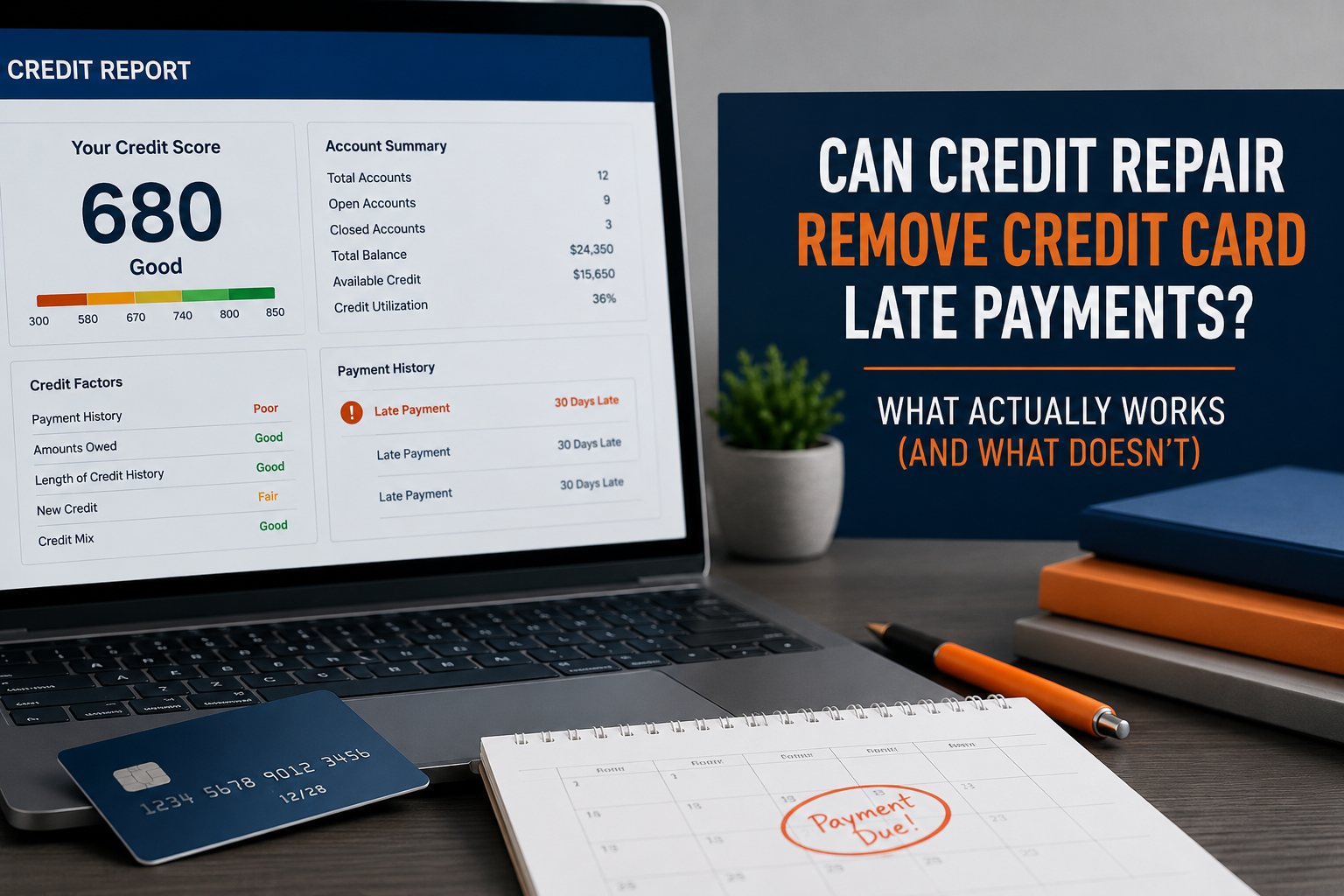
How Much Does a Late Credit Card Payment Actually Hurt Your Score?
Payment history makes up 35% of your FICO score. That single factor carries more weight than your total debt, your credit mix, or how long you have had your accounts. (Source: myFICO)
According to FICO's own credit damage data, one recent late payment can drop a score by up to 180 points. The damage depends on three things:
How high your score was before the missed payment
How late the payment was 30, 60, or 90+ days
How recently it happened
A person with a 780 score can lose between 90 and 150 points from a single 30-day late mark. Someone starting at 670 may drop 60 to 80 points from the same event. Higher scores fall harder because lenders view the slip as out of character.
Late payments also stay on your credit report for seven years from the original missed payment date. The impact fades over time, but the mark itself does not disappear on its own until that window closes.
What Counts as a Late Payment to Lenders
Your credit card company may charge a late fee the day after your due date. But lenders only report a late payment to the three credit bureaus, Experian, TransUnion, and Equifax, once the account is at least 30 days past due. Missing a payment by a few days will cost you a fee, but it will not appear on your credit report.
Can Credit Repair Actually Remove Late Payments?
Yes, but the answer depends entirely on what kind of late payment you have.
Inaccurate Late Payments Can Be Removed
Credit repair works best on errors. If your credit report shows a late payment that did not actually happen, you have a legal right to dispute it under the Fair Credit Reporting Act (FCRA). The bureau then contacts the data furnisher, your credit card company, and gives them 30 days to verify the information.
If the furnisher cannot verify the late payment, the bureau must remove it. This happens more often than people expect. Creditors have large reporting volumes, and sometimes they cannot produce the documentation to back up a negative mark.
Common inaccurate late payments we see in our practice include:
Payments were reported late due to a bank processing delay. The consumer paid on time, but the payment was posted after the due date
Late marks on accounts that were closed or paid in full
Errors where the wrong account or the wrong month was flagged
Late payments older than seven years are still showing on the report
Accurate Late Payments Cannot Be Legally Deleted
No credit repair company can remove a late payment that was correctly reported and is still within its seven-year window. Experian, TransUnion, and Equifax will verify the information with the creditor, confirm it is accurate, and close the dispute. The FCRA does not give consumers the right to remove accurate negative information, only inaccurate or unverifiable information.
Any company that promises to erase accurate late payments is misleading you. The Federal Trade Commission has taken action against companies that make exactly this promise. (Source: FTC.gov)
The Difference Between a Dispute and a Goodwill Letter
Understanding this distinction saves people a lot of time and wasted effort.
A dispute says, "This information is wrong." A goodwill letter says: "This information is correct, but please remove it anyway."
These two approaches go to different places and work in different situations.
How a Credit Dispute Works
A dispute goes to the credit bureau or directly to the creditor. You claim the information is inaccurate. The bureau investigates within 30 days. If the creditor cannot verify the information, the mark comes off.
Disputes work for errors. They do not work for accurate marks. Filing a dispute on a legitimate late payment wastes your 30-day investigation window and often resets the clock on your creditor relationship.
How a Goodwill Letter Works
A goodwill letter goes straight to the creditor. You acknowledge the late payment, explain the circumstances, and ask them to remove it as a one-time exception. Creditors are not required to say yes, but many do, especially when:
The late payment was a single, isolated event
You have an otherwise clean payment history with that creditor
The cause was a documented hardship, a medical emergency, a job loss, or a payment processing error
You send the letter politely and with supporting documentation
Last year alone, our team sent out over 300 goodwill letters on behalf of clients. The success rate was highest with smaller credit unions and regional banks. Large issuers like Chase and Citibank have stricter policies and more often decline.
Does Paying Off a Late Payment Remove It From Your Report?
Paying off the overdue balance does not remove the late payment mark from your credit report. The two things are separate entries.
Paying the balance stops further damage it prevents the account from going to collections or charge-off. But the historical record of the missed payment stays on your report for seven years.
What paying off the balance does is demonstrate to future lenders that you resolved the debt. Lenders distinguish between a late payment that was eventually resolved and one that escalated into a charge-off or collection. The mark stays, but its context improves.
How Long Does It Take to Recover From a Late Credit Card Payment?
Recovery time depends on how late the payment was and how you manage your accounts going forward.
A single 30-day late payment from three or more years ago typically has a minor impact on current scoring. FICO weighs recent behavior more than old behavior. Six to twelve months of clean, on-time payments after a late mark will reduce its scoring impact significantly.
In our office, we tracked 47 clients over 12 months who had a single late payment and then maintained perfect payment behavior. On average, their scores recovered 60 to 80 points within the first year, not to the pre-late-payment level, but close enough to qualify for better loan terms.
The three factors that speed up recovery:
Paying every other account on time, every month
Keeping credit card utilization below 30%
Not applying for new credit too frequently during the recovery period
How to Dispute a Late Payment Step by Step
If you believe a late payment on your credit report is inaccurate, here is how to challenge it:
Pull your full credit report from all three bureaus at AnnualCreditReport.com. You get one free report per bureau per year.
Identify the exact entry. Note the date, the creditor name, and whether the same error appears across multiple bureaus.
Gather your evidence. Bank statements, payment confirmations, or wire transfer receipts showing the payment was made on time are the strongest proof.
File a dispute with the bureau reporting the error. Each bureau has an online dispute portal. You can also submit by certified mail for a documented paper trail.
File a dispute directly with the creditor if you have clear proof. The creditor, not just the bureau, has the authority to update or remove the entry.
Follow up within 35 days if you do not receive a response. The FCRA gives the bureau 30 days to investigate, with a possible five-day extension.
If the dispute is rejected and you believe the result is wrong, file a complaint with the CFPB at consumerfinance.gov/complaint.
Can You Remove a Late Payment Without a Credit Repair Company?
Yes. Every step a credit repair company takes, you can take yourself for free.
Credit repair companies add value through time savings and experience. They know which arguments work with which bureaus, how to write effective dispute letters, and when to escalate to a goodwill request. For someone with multiple errors across multiple accounts, the time savings alone can justify the cost.
But for a single disputed late payment, a self-filed dispute is just as effective. The FCRA gives every consumer the same legal rights regardless of who files.
What credit repair cannot do, no matter who pays for it, is remove accurate information before the seven-year reporting window expires. Anyone who tells you otherwise is not being honest with you.
Struggling With Late Payments on Your Credit Report?
Not every late payment can be removed, but inaccurate reporting and credit report errors may be hurting your score. Get a professional credit analysis and discover your best options for improving your credit.
Get Your Free Credit AnalysisSee what's impacting your credit score and learn which negative items may qualify for dispute.
What to Do When the Late Payment Is Accurate and Recent
Accept the mark, protect everything else, and build forward.
A recent, accurate late payment will not disqualify you from credit. Lenders look at your full profile. One late mark surrounded by 36 months of on-time payments reads very differently from one late mark surrounded by other delinquencies.
The most effective steps right now:
Set up autopay on every credit card, even for the minimum payment. This prevents another late mark from stacking on top of the first.
Request a credit limit increase on accounts you have never been late on. A higher limit lowers your overall utilization, which is 30% of your FICO score.
Write a goodwill letter to the creditor who reported the late payment. Even if it does not work, it costs nothing and does not hurt your score.
Monitor your credit report monthly. Free monitoring through Experian, Credit Karma, or your bank's credit tool keeps you informed on how the mark's impact changes over time.
Time and consistent behavior are the most reliable credit repair tools that exist. No dispute letter, credit repair company, or legal strategy replaces them for accurate negative information.
Frequently Asked Questions
Can a credit repair company legally delete accurate late payments? No. The FCRA prohibits the removal of accurate, timely reported information. A company that promises this is violating FTC guidelines.
Does a late payment under 30 days show up on your credit report? No. Creditors only report to the bureaus at the 30-day threshold. A payment one to 29 days late may trigger a fee, but will not appear on your credit report.
Will a goodwill letter always work? No. Creditors are not required to honor them. Success rates are highest with smaller lenders and for isolated incidents backed by documentation.
Can you dispute the same late payment more than once? Yes, but only if you have new information or evidence that was not included in the original dispute. Filing the same dispute repeatedly without new evidence rarely produces a different result.
Does a late payment affect all three bureaus the same way? Not necessarily. Creditors may report to one, two, or all three bureaus. Check each report separately — a late payment appearing on one bureau may not appear on the others.